
Retirement taxes rarely create problems all at once.
More often, they show up quietly — through missed opportunities, unexpected penalties, or decisions that couldn’t be reversed.
That’s why education around retirement tax planning matters long before a required minimum distribution (RMD) or rollover decision is on the table.
Below is a free educational video resource designed to highlight some of the most common — and costly — retirement tax mistakes, along with practical insights on how to avoid them.
Start with a Quick Preview
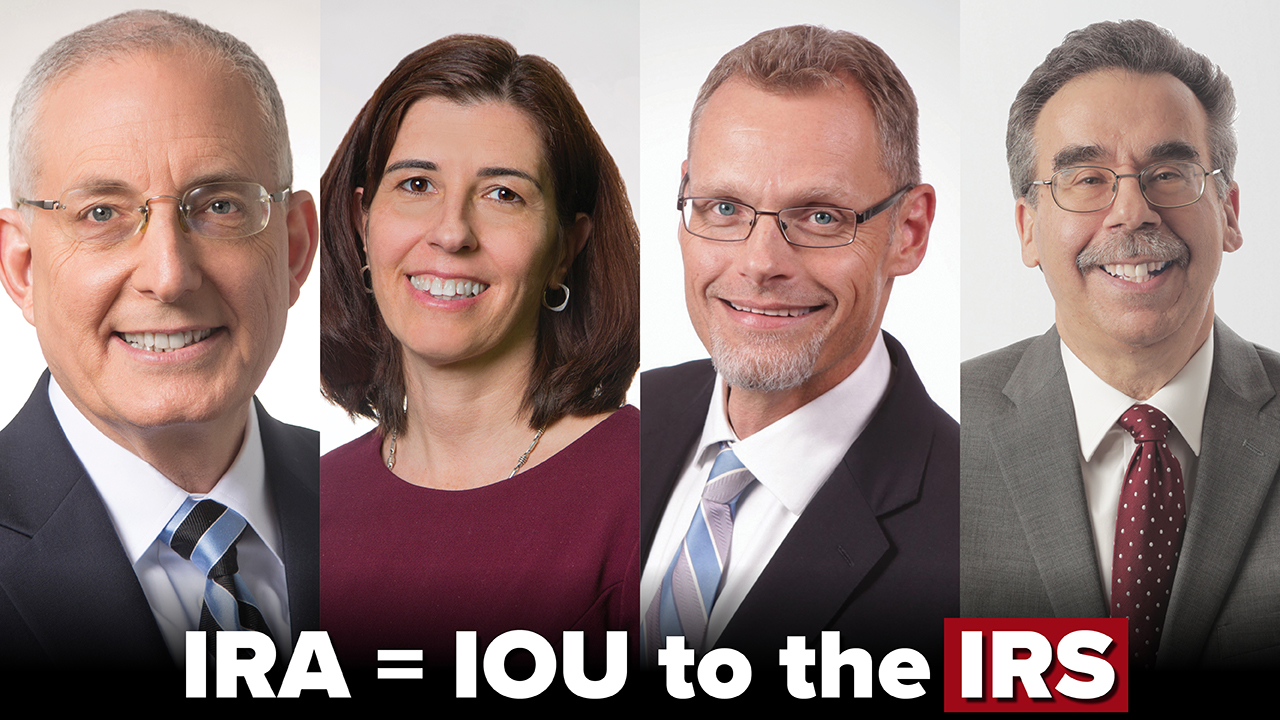
Begin with this 2-minute trailer for a snapshot of the issues many retirees encounter when navigating IRAs, Roth conversions, and beneficiary decisions.
Then, Watch the Full Educational Session
For a deeper dive, the 40-minute special explores how retirement tax decisions evolve across different stages of life and why small missteps can have long-term consequences.
Topics covered include:
- Tax-saving opportunities in your 50s, 60s, and 70s
- How to reduce RMD taxes and avoid Medicare IRMAA surcharges
- Common Roth conversion and rollover mistakes
- Why beneficiary forms — not wills — control IRA inheritance
Why This Type of Education Matters
Retirement tax planning is complex — and the rules continue to change. What worked years ago may no longer apply, and decisions made without full context can limit future flexibility.
This resource reflects the type of advanced retirement tax education used behind the scenes when evaluating income strategies, tax exposure, and legacy considerations. Ongoing professional training with Ed Slott and his organization helps ensure planning decisions are informed, current, and thoughtfully applied — rather than reactive.
Put simply: the goal is to help reduce unnecessary taxes, avoid irreversible mistakes, and bring clarity to decisions that often feel overwhelming.
Applying This to Your Own Situation
Educational resources are most valuable when applied within the context of a complete financial picture — including income needs, tax considerations, estate planning, and personal goals.
If questions arise while watching, or if you’d like help understanding how these ideas relate to your own retirement plan, a conversation can always be scheduled to explore that further.
This educational resource is shared by Gordon Wollman as part of ongoing retirement planning education.
Any opinions are those of the author and not necessarily those of Raymond James. Expressions of opinion are as of this date and are subject to change without notice. Raymond James and its advisors do not offer tax or legal advice. You should discuss any tax or legal matters with the appropriate professional. Investing involves risk and you may incur a profit or loss regardless of strategy selected, including diversification and asset allocation. Prior to making an investment decision, please consult with your financial advisor about your individual situation. Raymond James is not affiliated with and does not endorse the opinions or services of Ed Slott and Company, LLC.
401(k) plans are long-term retirement savings vehicles. Withdrawal of pre-tax contributions and/or earnings will be subject to ordinary income tax and, if taken prior to age 59 1/2, may be subject to a 10% federal tax penalty.
Matching contributions from your employer may be subject to a vesting schedule. Please consult with your financial advisor for more information.
Contributions to a traditional IRA may be tax-deductible depending on the taxpayer’s income, tax-filing status, and other factors. Withdrawal of pre-tax contributions and/or earnings will be subject to ordinary income tax and, if taken prior to age 591/2, may be subject to a 10% federal tax penalty.
Roth 401(k) plans are long-term retirement savings vehicles. Contributions to a Roth 401(k) are never tax deductible, but if certain conditions are met, distributions will be completely income tax free. Unlike Roth IRAs, Roth 401(k) participants are subject to required minimum distributions at age 72 (70 ½ if you reach 70 ½ before January 1, 2020).
Unless certain criteria are met, Roth IRA owners must be 59½ or older and have held the IRA for five years before tax-free withdrawals are permitted. Additionally, each converted amount may be subject to its own five-year holding period. Converting a traditional IRA into a Roth IRA has tax implications. Investors should consult a tax advisor before deciding to do a conversion.
CSP #968822